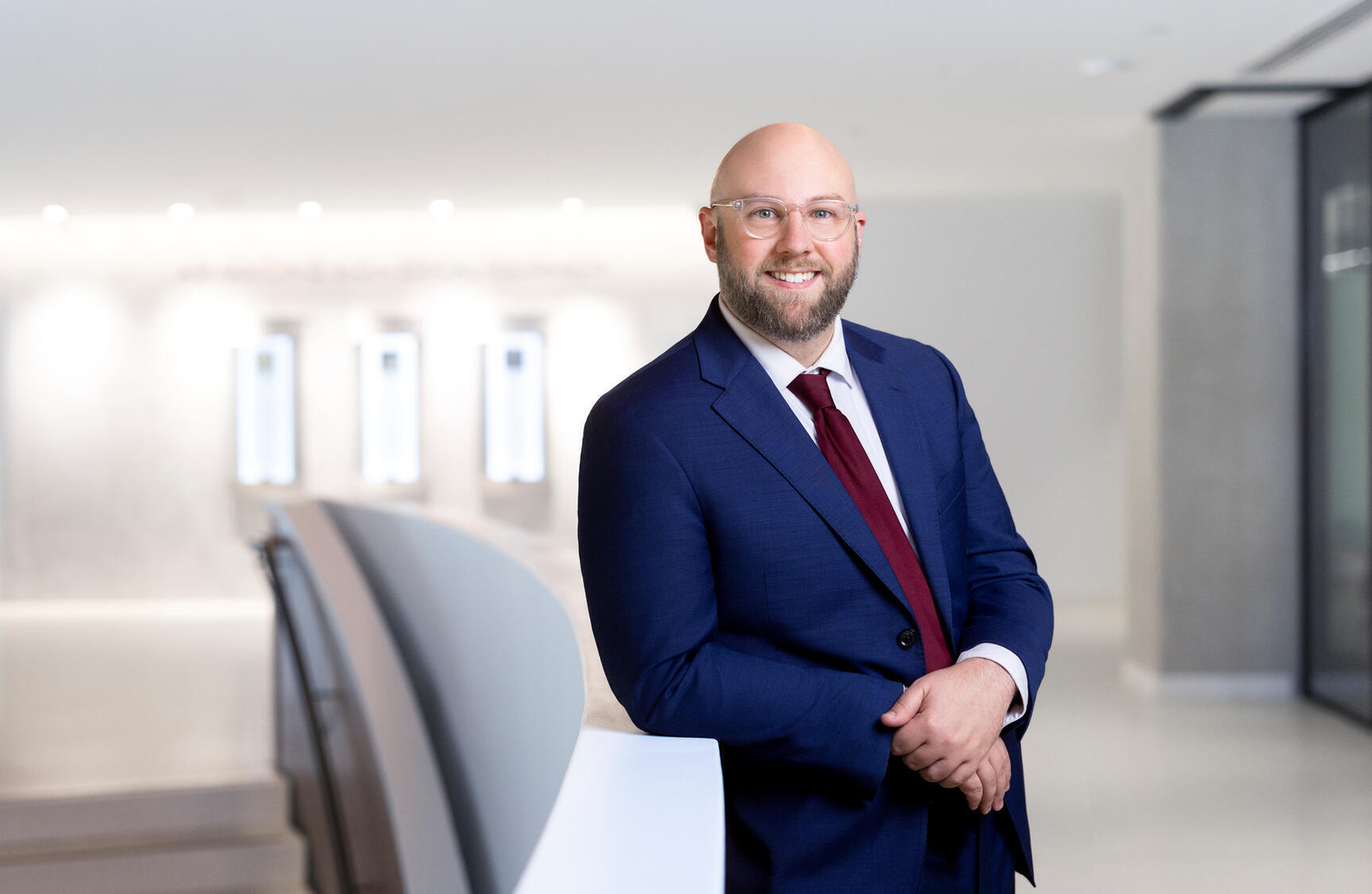
Growing up in the small town of Merrill, Iowa — with a population of approximately 700 residents — and with the nearest hospital close to an hour away, Brandon Trammell, MPAS, PA-C (PA ’25), did not have much knowledge of careers in healthcare. But it’s something he intrinsically knew he wanted to do.
“I’ve always found happiness in providing for others,” he says.
Many Firsts
Trammell — who was the first in his family to go to college — got an undergraduate degree in biology from Creighton University in Omaha, Nebraska. That degree launched his healthcare career path with subsequent roles as an operating room assistant, patient care technician and clinical research coordinator in thoracic oncology research.
As a clinical research coordinator, Trammell worked one-on-one with patients undergoing treatment for lung cancer and was the point person to help them schedule visits with different specialties. He learned that he really enjoyed being the point person for people to rely on.
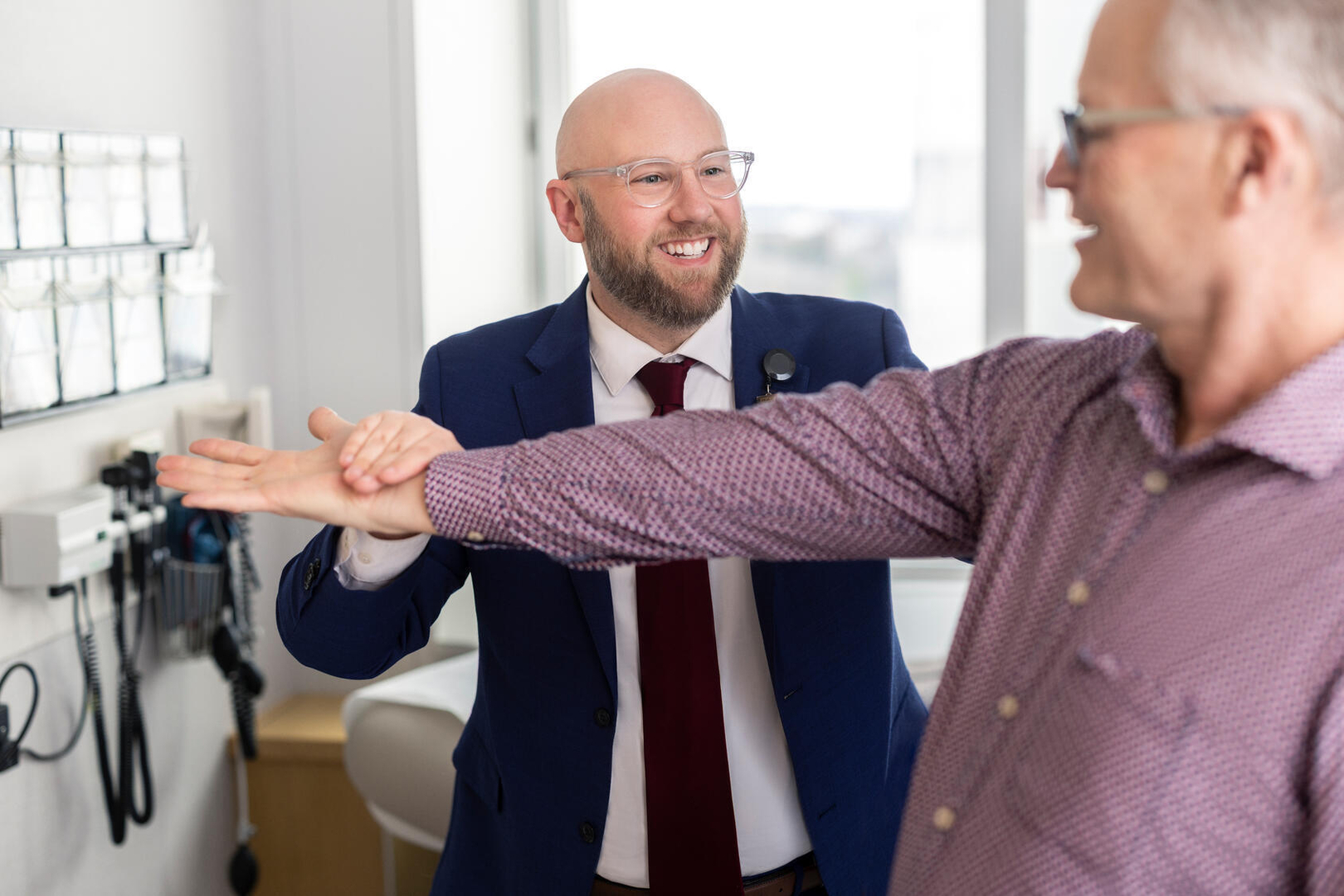
“It brings me a lot of joy in being there for patients when they are going through their toughest times or being the middle person to help coordinate their future needs,” he says.
Trammell had his sights set on finding a job on the East Coast, but he was also interviewing for jobs closer to his family in Iowa. Among the ones he applied for closer to home was an opening for a research protocol associate at Mayo Clinic in Rochester.
He was offered the job at Mayo and gladly accepted it.
Potential to Succeed
Trammell was eventually promoted to a program coordinator position in neurology, where many of the people he worked closely with recognized that he had the potential to grow his career further. They encouraged him to pursue higher education and suggested that he would make a great physician assistant.
He began by shadowing his colleagues and the more he learned about their jobs, the more he knew he wanted to be a part of it. He met with Shekitta Acker, Ph.D., the program director for the physician assistant program at Mayo Clinic School of Health Sciences.
Trammell toured other facilities to see if they would be the right fit, but he knew that his mind was already made up and Mayo Clinic was the place for him. He was drawn to the program’s focus on active learning and the evidence-based clinical reasoning needed for high-quality patient care.
“When you’re looking for a program, you look for a program that you have similarities with personality-wise, and whether you think you will be supported by that program,” he says. “And you look at the kind of experiences that you get with clinicals and who you’re learning from as well. We are taught by world-class leaders.”
The physician assistant program is one of more than 140 academic programs that the Mayo Clinic School of Health Sciences offers to prepare students for rewarding and successful careers in allied health professions.
While Mayo Clinic School of Health Sciences does not directly grant associate or bachelor’s degrees, students in associate-level or bachelor’s-level programs can earn degrees from regional accredited colleges or universities that Mayo affiliates with in offering these programs.
In order to be accepted into the master’s level physician assistant program, Trammell had to retake some of his earlier college classes. Being a nontraditional student, his credits for some of those requisite classes had expired.
Hard Work Pays Off
While he was at it, Trammell decided to earn a master’s degree in public health as well to boost his graduate-level course credits. His days were spent working full-time in neurosurgery research, working part-time as a server in a restaurant and taking 12 to 18 college credits at the same time.
It was all worth it because he was accepted into the master’s level physician assistant program on his first try. It’s a feat he credits to the support he received at Mayo.
“I don’t think I could be anywhere else without them,” Trammell says. “I am very grateful for having my Mayo Clinic leaders and co-workers recognize my potential and help me in achieving my goals.”
The two-year program — a year of didactic or classroom learning and a year of clinical learning — showed him the value of a Mayo Clinic education. He was getting different experiences in fields such as cardiology, pulmonology and more. The classroom learning was hands-on where he learned to diagnose patients, and it helped set him up well for the clinical aspect of the role.
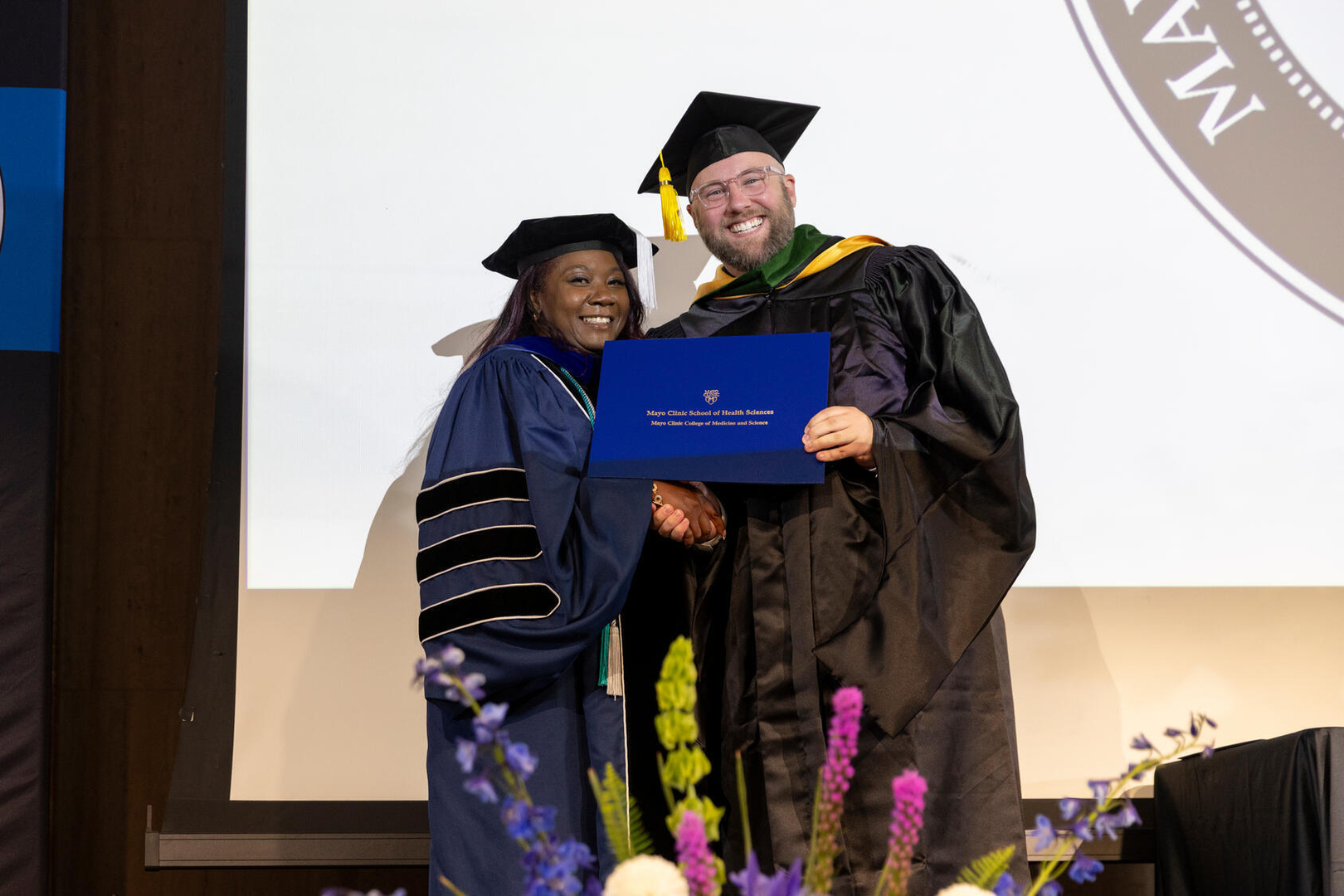
With that broader-based education, Trammell was also learning that there were opportunities to be specialized.
Once Trammell completed the physician assistant program, he began working in orthopedic surgery. While the path to getting there wasn’t straightforward or easy, he’s happy he has arrived.
“I get to work one-on-one with patients, and I hope to start some research projects with the surgeon,” he says.
The one-to-one ratio of physician assistant to surgeon is also something he appreciates in his role.
“I like being reliable,” Trammell says. “My surgeon trusts me and knows that I will get the job done. I also have the autonomy to diagnose and treat patients and provide them with resources or education.”
Since Mayo Clinic sees a lot of patients with serious or complex conditions, Trammell says he likes being able to provide support alongside the physician.
“I’ll first assist the surgeon in surgery but also see the patient progress along the way through the recovery process,” he says.
At the end of the day, Trammell has found a way to do what he loves while making time for the people he cares about in his life.
And it’s the support from Mayo Clinic that has made his dream come true.
This story was originally published in Issue 2 of the 2026 Mayo Clinic Alumni Magazine.