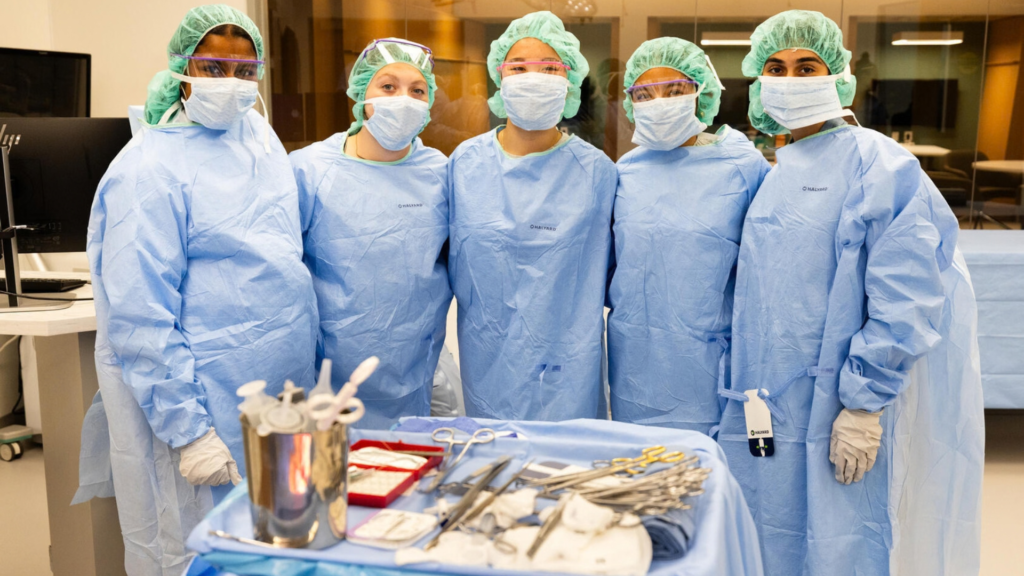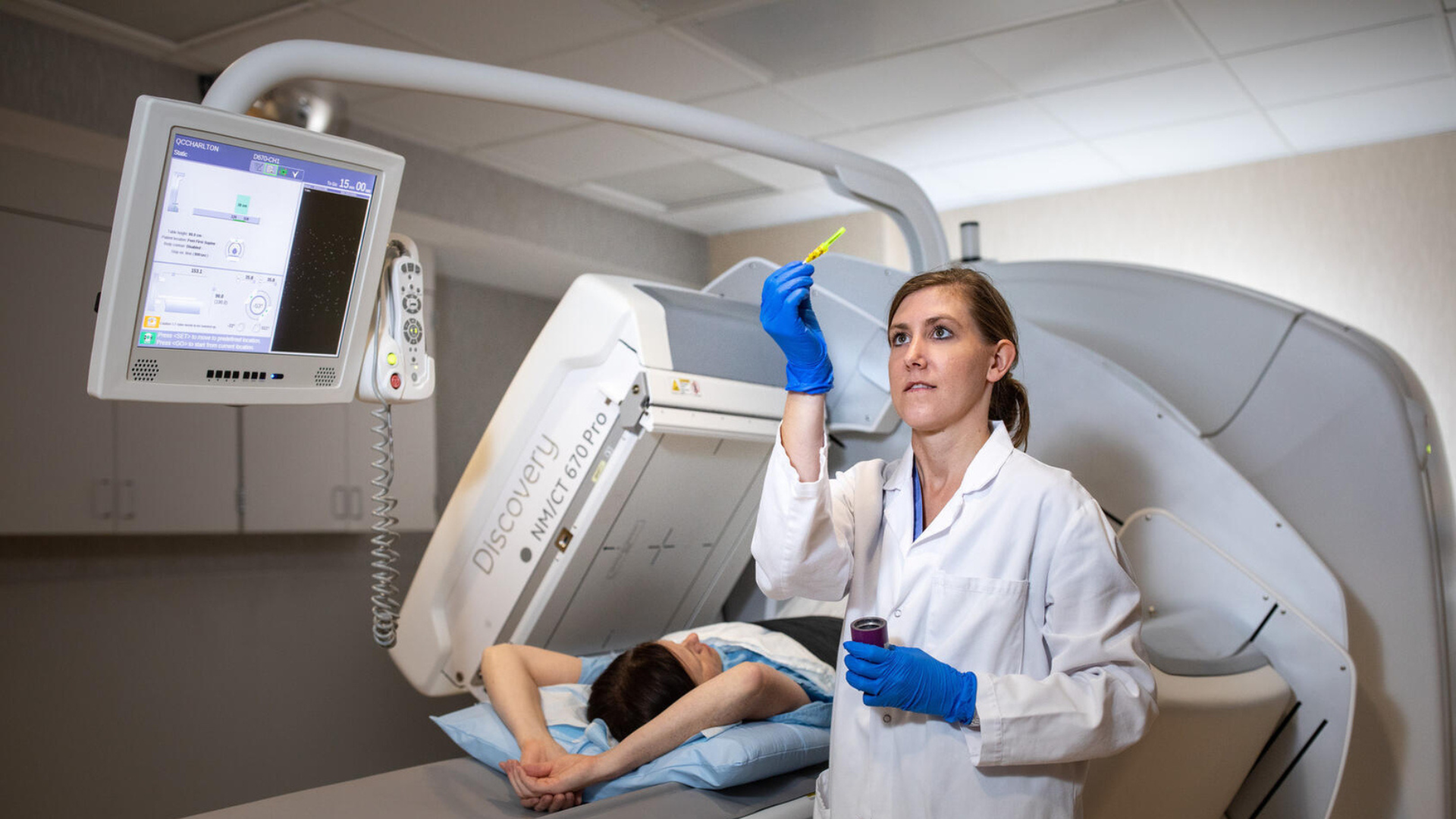
Mayo Clinic School of Health Sciences is celebrating a milestone this year with the graduation of the 50th cohort of Nuclear Medicine Technology Program students.
Now firmly established, with nearly 400 alumni, the program started out as a way to address a labor shortage, built on a foundation of expertise and belief.
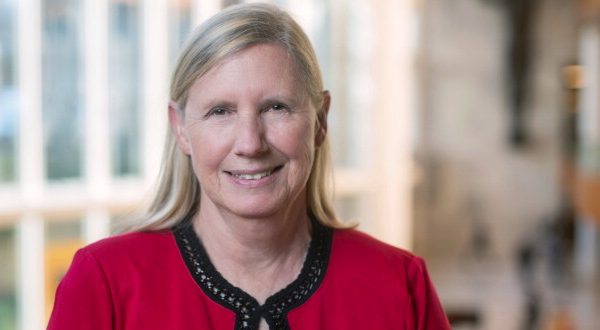
Nancy Hockert, the program’s first director, says the program was created out of necessity, with James Robertson, M.D., Ph.D., a Nuclear Medicine radiologist, and Mike Sinclair, a Nuclear Medicine supervisor, recognizing the practice needed technologists.
“How do you recruit? How do you get good workers? You educate and instruct them,” Hockert says.
Building from the ground up
In the fall of 1976, the program began in collaboration with the University of Wisconsin at La Crosse, which had a bachelor’s degree program in nuclear medicine technology. The first three students, Joan Dinnauer, Thomas Pagel and Debra Reinhardt, joined from UW-La Crosse.
Mayo Clinic’s program was not yet accredited because authorization required a year in operation.
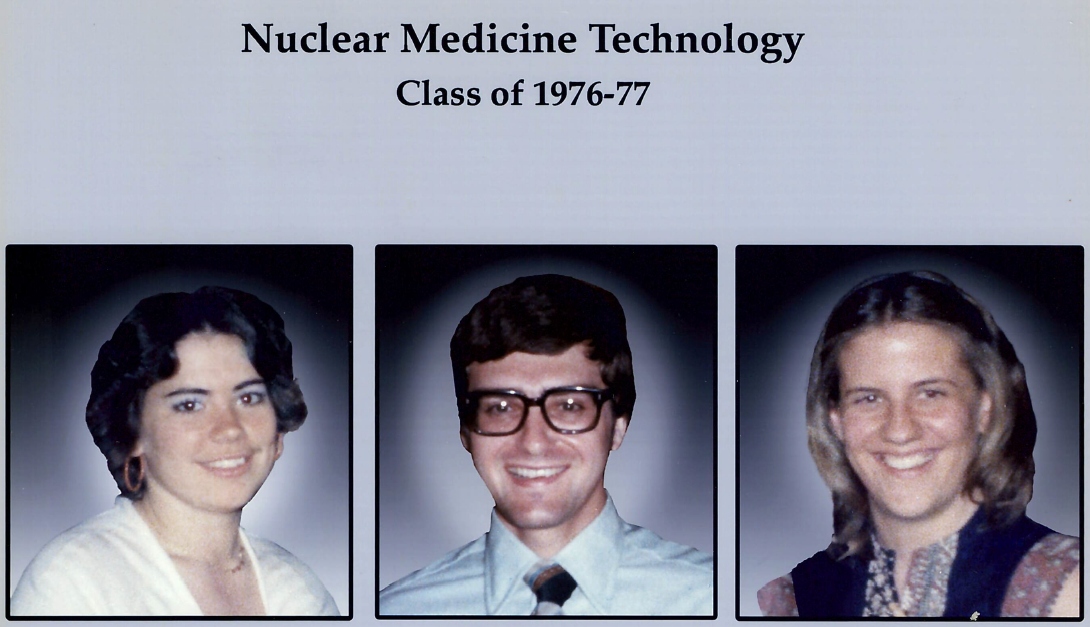
“These three kids came in knowing [accreditation] was a possibility, but they had faith in the world-famous Mayo Clinic,” Hockert says.
She adds that the program initially was being run by Sinclair, who “was just way too busy. He had a full plate just being supervisor.”
So in fall 1978, Hockert raised her hand. “I said, ‘Gee, Mike, I’d like to be more involved with the program. What do you need?’” He asked for her input and she offered up recommendations, “and within a month I had the whole program.”
“I’m action-motivated,” she says. “I see things that I’d like to happen and I step forward. I don’t sit still well and I just volunteered because I could see the need.”
Youth movement
“The first year with the first three students, we were all very young,” Hockert says, adding that she and the technologists involved in the program weren’t much older than the students. “It was actually a very emotional time because of the closeness of the age to mentor and work with these young people.”
The experience in the first year helped those involved to refine the program for subsequent generations, she says. The program became more professional, curriculum was added and adapted, and demand continued to grow. Other universities also began offering programs into which Mayo Clinic could tap for students to continue their training.
Michelle Bartel, C.N.M.T., N.M.T.C.B., a member of the Nuclear Medicine Program’s 15th cohort in 1991-92, says Hockert ensured that professionalism was part of the curriculum.
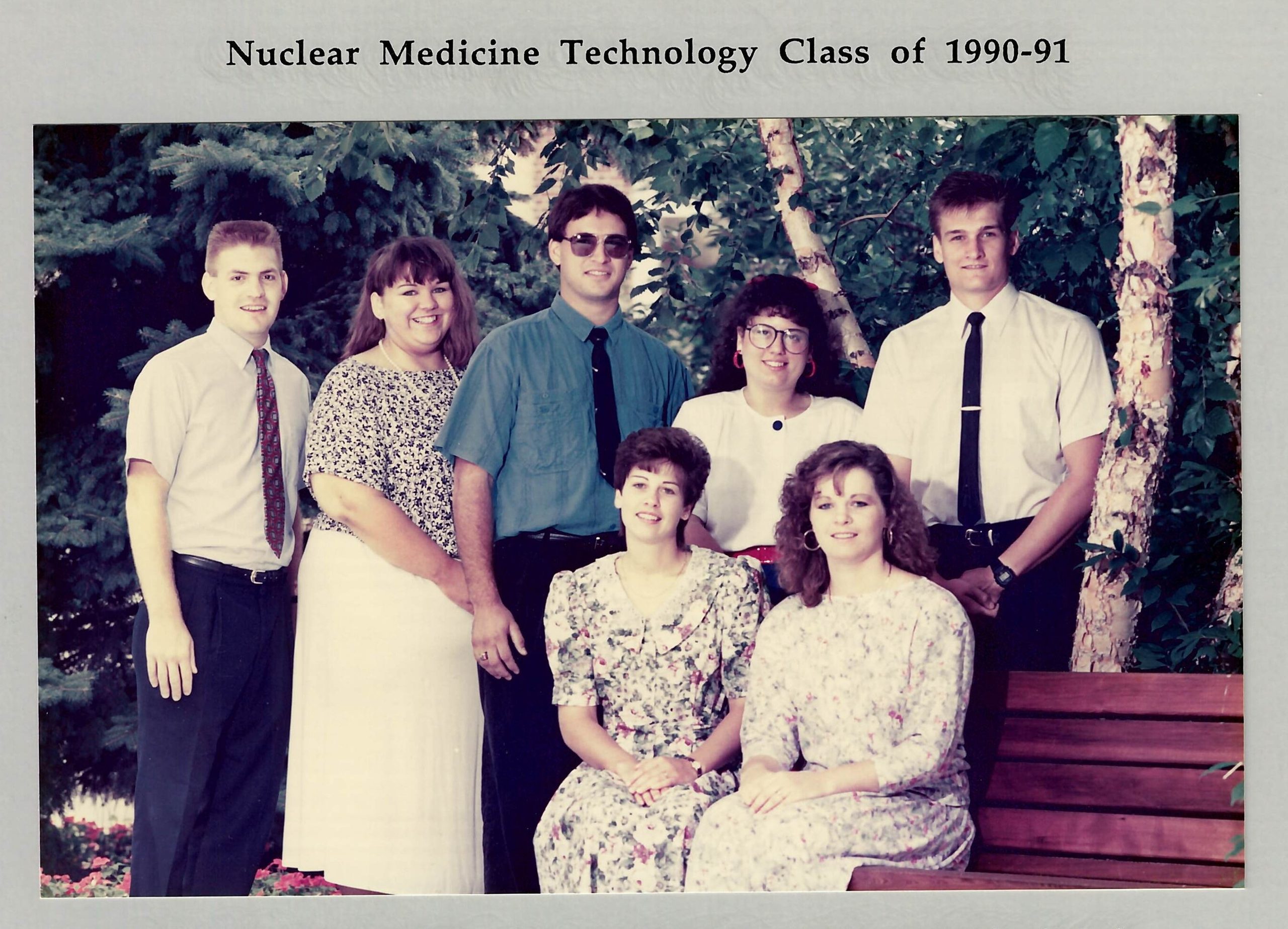
“Nancy taught professionalism — not just knowing how to do the exams, but how to how to talk to patients, how to talk to co-workers, how to go in the reading room and talk to physicians, which can be intimidating when you’re 21 years old,” she says. “Was it was it a smooth transition? No, because I was learning — I’m still learning — how to be a great employee.”
Bartel says the program excels at teaching students how to be dedicated nuclear medicine technologists with all the knowledge they need and the experience to bring professionalism to their roles.
Hockert’s influence
Bartel — now a Nuclear Medicine technologist who splits time between the theranositcs practice at Mayo Clinic in Rochester and the Nuclear Medicine Technology Program, in which she serves as associate program director and clinical coordinator — says Hockert was a factor in her decision to continue her education at the Mayo Clinic School of Health Sciences.
“She had a welcoming demeanor — nurturing, enthusiastic — so I felt immediately like this was the place for me,” Bartel says. “I remember coming to an open house with my father, trying to decide if this was something I wanted to do, and she was there and I immediately made a connection with her.”
Built to last
Hockert credits the success of the program to the staff, a sentiment echoed by Matthew Ugorowski, M.Ed., the current program coordinator.
“I was able to do this because of the support I got from the Nuclear Medicine staff. I didn’t do the teaching. I did the organizing and the coordinating,” Hockert says of her 30 years leading the program. “The people in the pharmacy came in, the doctors, the Ph.D.s, the technologists all came in and taught, and it was just really a wonderful experience.”
Ugorowski adds: “Our staff are the backbone of our program — they have been for 50 years — and this includes our sites at Mayo Clinic in Arizona and Florida, including our health system sites, and throughout that experience, which is very comprehensive and includes subject-matter experts coming into the classroom.”
He adds that staff have been the key to the program’s survival through multiple generations, helping to navigate changes to the field.
“What makes Mayo Clinic unique, apart from some of the obvious things like our procedural volumes, our technology and our procedural diversity, would be the unwavering commitment from our top-level leadership down — everyone wants to see our students succeed,” Ugorowski says. “I firmly believe that it’s Mayo’s primary commitment within the Education shield to fully support students and meet them where they’re at individually and tailor to their needs so they have the best chance of being successful.”
He cites the staff serving as faculty in a part-time capacity — in addition to their clinical work — who not only teach but model best practices. “Without their support our program would not be successful and our students would not be as successful,” he adds.
Bartel says the staff helped her feel supported during her time in the program, which she carries forward.
“I learned a lot of life lessons that I’m still sharing with students — like never assume anything, come prepared, those types of things—that probably I wasn’t doing as a student,” she says.
The Mayo way
Many Nuclear Medicine Technology Program alumni begin their careers at Mayo Clinic.
Bartel says some of the factors that draw students to the Mayo Clinic School of Health Sciences inspire them to pursue opportunities across Mayo Clinic sites.
“We’re a college within a healthcare institution, which is very unique — having all the bonus opportunities that if you were just at a hospital you wouldn’t get,” she says. “The breadth of procedural diversity and high-volume studies — our students see things that in a smaller institution they wouldn’t see. And they get to actively be a part of research studies — things that are in the forefront of maybe becoming clinical.”
Hockert and Ugorowski say another selling point for prospective students is that Mayo Clinic graduates have been, and continue to be, highly sought after in the job market.
“This demonstrates a high-quality education program recognized by our peers,” Hockert says. “Also, a high number of alumni have been promoted to supervisors and management positions.”
50 years later
The Nuclear Medicine Technology Program is a rigorous 50-week program that blends classroom teaching with hands-on learning, Ugorowski says.
“Our goal is to inspire and motivate students to become the best version of themselves, and throughout that, we will lay the groundwork through about one-third of their time being spent in the classroom didactic learning, and about two-thirds of their time spent in the clinical practice,” he says.
By the end of the program, students are prepared to sit for their registry exam, he adds.
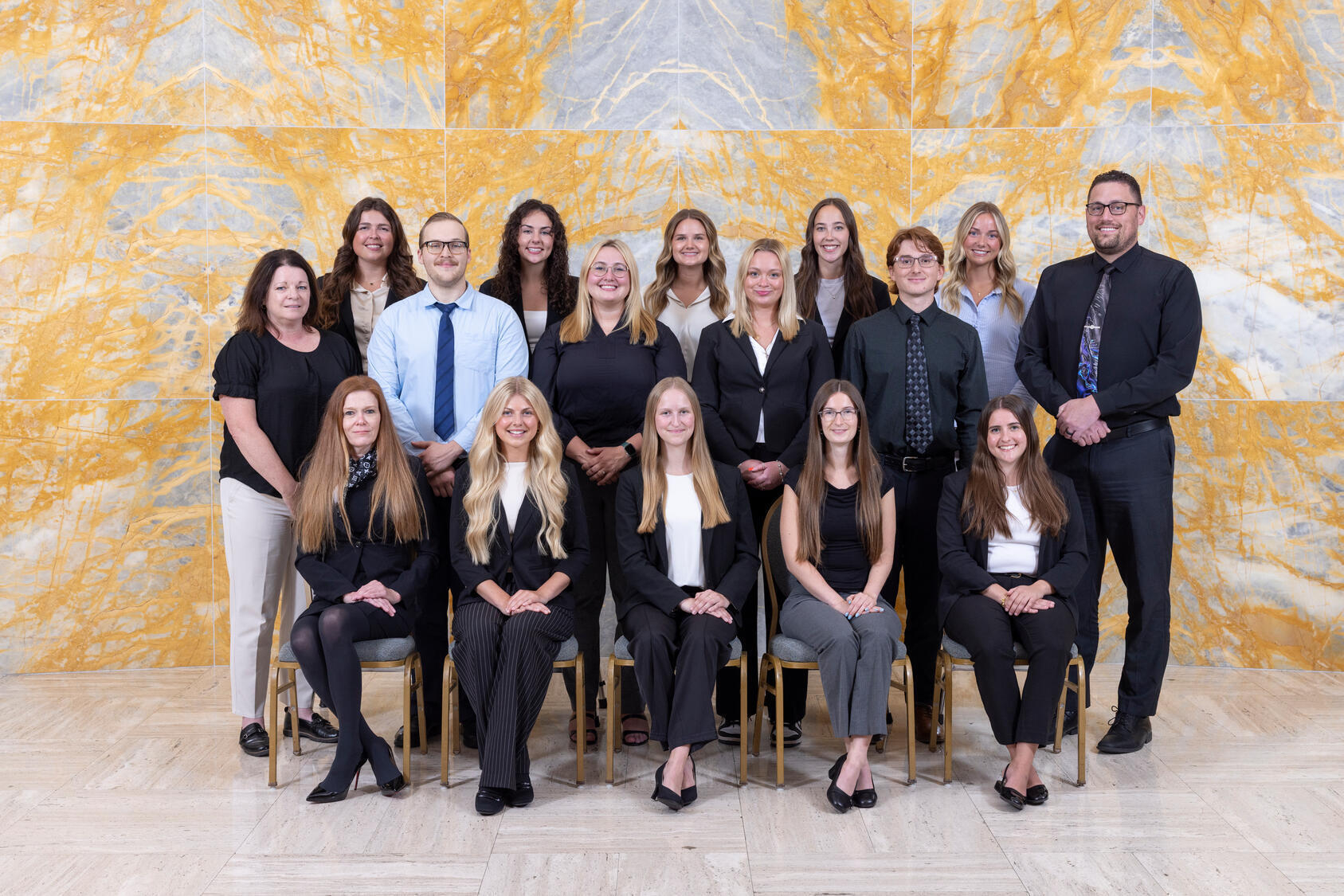
“I think the future of the nuclear medicine technology program is incredibly bright. I believe that in 2026, this program will continue to stand the test of time and will have the opportunity to celebrate its centennial anniversary,” Ugorowski says. “I think what has allowed it to progress through the 50 years and will allow it to progress into the future is having a wonderful talent pool as part of a program succession plan.”
He says the program will continue to evolve and innovate, finding new ways to deliver the curriculum to students in creative ways. This may include welcoming simulation-based methodologies in healthcare — like a mock code scenario they recently introduced — and continuing to embrace those types of experiences to complement the hands-on clinical experience, which is the bedrock of the curriculum.
“I would like to express sincere gratitude to Nancy for building an ironclad foundation for this program. It’s allowed us to benchmark against her standards from 50 years ago, and to carry on her legacy now five decades later,” Ugorowski says. “I also would like to express appreciation for her continued support from afar. She’s been retired for almost two decades, but she’s very present — including on social media and even occasionally dropping in in person.”